In Stock

© Marijuana Seeds Canada | 2026


 We charge in Canadian dollars. Save 40%!


This genetic combination gives the cultivar an indica-leaning character, with a complex background that contributes to its relaxing overall profile and rich aromatic expression. Shop marijuana seeds in Canada with MJ Seeds Canada and explore a selection of popular strains and quality genetics.




Shipping: Your order will be shipped 22 September 2026 by USPS with tracking, shipping cost $20.00.
Payment Options: Payment can be made with Credit/Debit Card, Cash and Bitcoin.
Free Seed: Spend $200 or more to enjoy FREE SHIPPING! Plus, if you spend $420, you’ll receive 10 FREE SEEDS along with FREE SHIPPING.

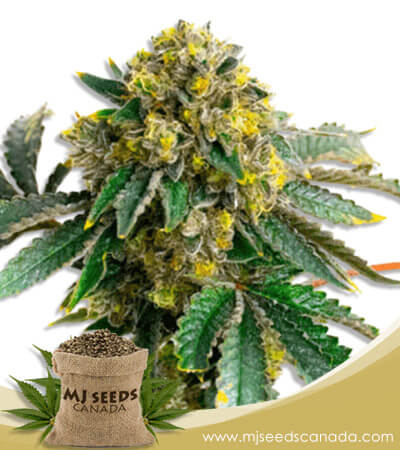
GMO Gush Mints is a hybrid cannabis cultivar with a reported genetic lineage of GMO × Gush Mints. GMO is commonly associated with Chem D × GSC, while Gush Mints is reported as a combination of Kush Mints × F1 Durb × Gushers. Together, these genetics bring fuel-forward, Kush-influenced, minty, and fruit-driven characteristics into a distinctive hybrid profile.
This cultivar is considered a Difficult grow and is better suited to growers who are comfortable managing vigorous plants and larger canopies. Its substantial growth potential means adequate vertical space and regular structural management are important, particularly as the plant transitions into flowering. Indoor and outdoor specimens can both reach approximately 5–8 ft (1.5–2.4 m) under favorable conditions, while early canopy training can help encourage more uniform growth, improve light distribution, and make the plants easier to manage throughout the flowering cycle.
Indoor cultivation allows greater control over the growing environment and makes it easier to manage the plant’s vigorous structure. Consistent lighting, good air circulation, and sufficient space between plants can help maintain an even canopy and support healthy flower development. As flowering progresses, careful humidity control becomes increasingly important, particularly around dense flower clusters, while maintaining adequate airflow can help promote a healthy late-flowering environment. Under suitable indoor conditions, growers can expect a flowering cycle of approximately 9–10 weeks and yields of around 400–500 g/m².
Outdoor cultivation performs best in a warm, sunny, temperate climate, particularly where plants receive ample direct sunlight and the late flowering period remains relatively dry. Because of their potential size, adequate spacing and structural support can be beneficial, while protection from excessive moisture can help maintain healthy flower development as harvest approaches. Under favorable outdoor conditions, reported yields can reach approximately 400–600+ g per plant, with harvest typically occurring around mid to late October.

$65.00 – $240.00

$65.00 – $240.00

$65.00 – $240.00

$65.00 – $240.00
$65.00 – $240.00

$65.00 – $240.00
Important Links
Are You 18 Or Over?
By clicking 'Continue', you confirm that you are over 18 years old. By using this website, you agree to our terms of service.